
A few months ago, I found myself at a crossroads in my cybersecurity career. I wanted to grow, take on bigger roles, and earn industry recognition, but I wasn’t sure which certification would help me get there.
I kept hearing about CISA, CISM, and CISSP, all respected certifications, but each with a different focus. Some people trusted CISA for auditing and compliance, others said CISM was the best for security management, while many called CISSP the gold standard for security professionals.
So, I started digging. I wanted to understand:
- What does each certification focus on?
- Who should take which one?
- How do they help in real-world jobs?
If you’re also trying to decide between CISA, CISM, and CISSP, this guide will help you break it down in simple terms so you can choose the right path for your career.
Table of Contents
- What are CISA, CISM, and CISSP?
- CISA: Preferred Certification for Auditors
- CISM: The Manager’s Choice
- CISSP: The Security Professional’s Choice
- Comparing CISA, CISM, and CISSP
- Choosing the Right Certification
- Preparing for the Exams
- Continued Commitment to Learning
- Final Thoughts
- FAQ
- Q1. Which certification is better in 2026: CISA, CISM, or CISSP?
- Q2. Is CISA better than CISM for audit and compliance careers?
- Q3. Is CISM better than CISSP for security managers?
- Q4. Is CISSP still worth it in 2026?
- Q5. What is the main difference between CISA, CISM, and CISSP?
- Q6. Which certification should I choose for a cybersecurity leadership role?
- Q7. Which certification is best for IT auditors?
- Q8. Which certification is best for security architects?
- Q9. Which is harder: CISA, CISM, or CISSP?
- Q10. Do CISA, CISM, and CISSP require work experience?
What are CISA, CISM, and CISSP?
Let’s start with a brief overview of these certifications:
- CISA (Certified Information Systems Auditor) is a qualification issued by ISACA for IT auditing.professionals involved in governance, risk and compliance-related roles.
- CISM (Certified Information Security Manager) is also offered by ISACA and targets security managers handling aspects like risk management, program development, and incident response.
- CISSP (Certified Information Systems Security Professional) is administered by (ISC)2 and focuses on a broader spectrum of cybersecurity domains to produce well-rounded security practitioners and leaders.
All three certifications are globally respected and have helped many advance to senior-level positions. However, they vary in terms of prerequisites, intended job roles, domains covered, and other factors. Understanding these differences is crucial to determine the one most suitable for your career stage and goals.
Read more: Is Cybersecurity A Good Career? Pros and Cons.
CISA: Preferred Certification for Auditors
The CISA certification stands for “Certified Information Systems Auditor.” This credential is bestowed upon an individual by ISACA, an organization known as “Information Systems Audit and Control Association.” CISA certification recognizes the competencies of an auditor working in the field of auditing, controlling, and safeguarding of organizational information systems.
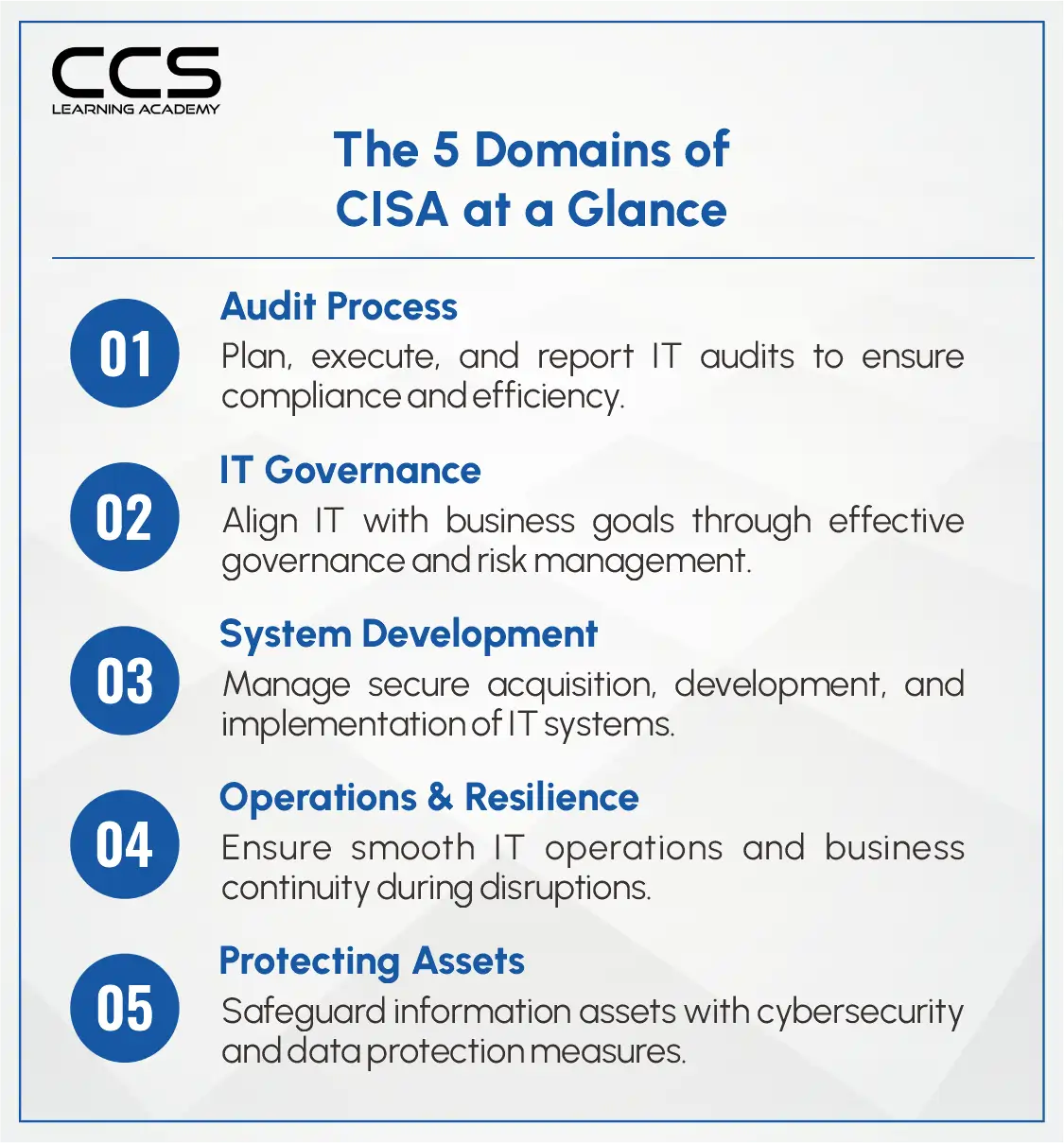
Main Domains
- Auditing Process.
- IT Governance and Management.
- Information Systems Acquisition, Development and Implementation.
- IT Operations and Business Continuity.
- Information Asset Protection.
CISA is a certificate that indicates proficiency in assessing vulnerabilities, providing reports on compliance, and implementing necessary controls for the organization. It is a good choice for those who specialize in auditing in the field of IT.
Requirements for the Certificate
To become a certified auditor, it is necessary to successfully pass an exam and have at least five years of work experience as an information systems auditor, controller or security expert. Up to three years can be waived based on education and other certificates.
Read more: Cybersecurity vs. Data Science: Your Ultimate Career Guide.
Skills Gained
- Assessing and auditing IT systems and controls.
- Evaluating and mitigating IT risks.
- Ensuring compliance with regulations and standards.
- Implementing and maintaining security controls.
- Advising on information security strategies and best practices.
Common Job Roles
- IT Auditor.
- Information Systems Auditor.
- IT Risk and Compliance Manager.
- IT Audit Manager.
- Information Security Analyst.
Industry Demand and Salary
CISA is highly sought after in industries such as finance, healthcare, government, and consulting, where audit, compliance, and risk management are crucial. According to ISACA, the average annual salary for CISA-certified professionals in the United States ranges from $98,000 to $149,000, with a median of around $98,000 as of 2025.
CISM: The Manager’s Choice
CISM certification, issued by ISACA, aims to address the management dimensions of information security. This certification is meant for people working in developing, managing, and overseeing enterprise information security programs.
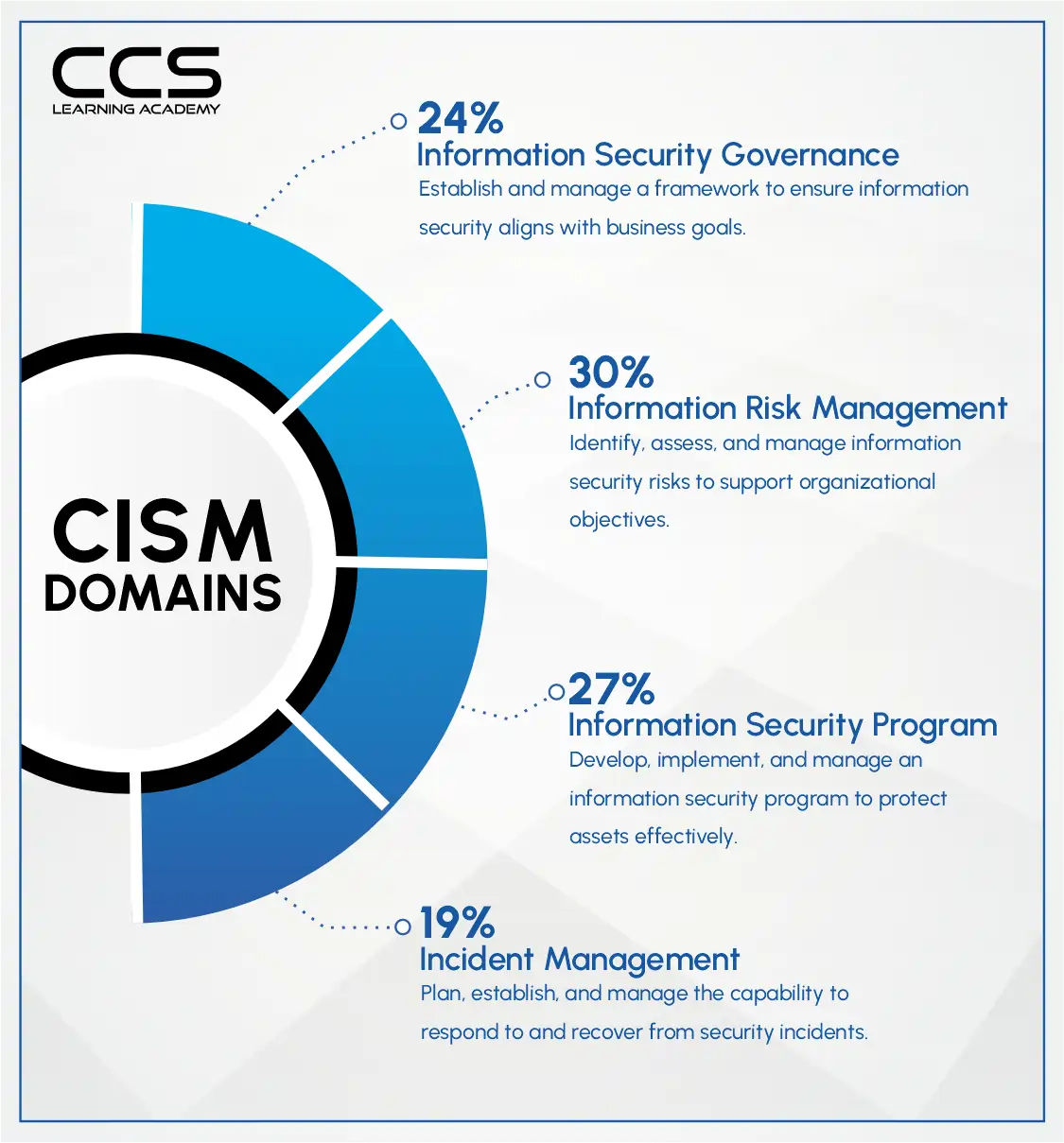
Core Areas
1. Information Security Governance.
2. Information Risk Management.
3. Information Security Program Development & Management.
4. Information Security Incident Management.
Individuals holding CISM certification can be very effective in strategy alignment with business objectives, risk management, security program development and implementation, and incident response.
Pre-requisites
The CISM certification requirement includes passing the exam along with gaining at least five years of experience in the field of information security management, and at least three years in at least three of the four CISM areas.
Read more: What is VDI in Cybersecurity? Definition, Risks, and Best Practices.
Gained Skills
- Implementation of an information security governance process.
- Identification, assessment, and mitigation of information security risks.
- Development, implementation, and management of information security programs.
- Leadership in the areas of incident response and management.
- Integration of security activities into corporate objectives.
Typical Job Positions
- Information Security Manager.
- IT Security Manager.
- Information Risk Manager.
- Chief Information Security Officer (CISO).
- IT Governance Manager.
Professional Demand and Pay Scale
CISM is greatly sought after by industries that value the specialty of information security governance and management such as financial services, health care, technology, and government. According to reports, the yearly salary range of CISM practitioners within the US from 2010-2025 ranges from $83,000 to $158,000 with an average of about $125,000.
CISSP: The Security Professional’s Choice
It is the one that seems most favored by many. That brings us to CISSP, an internationally recognized certificate provided by the (ISC)² International Information System Security Certification Consortium.
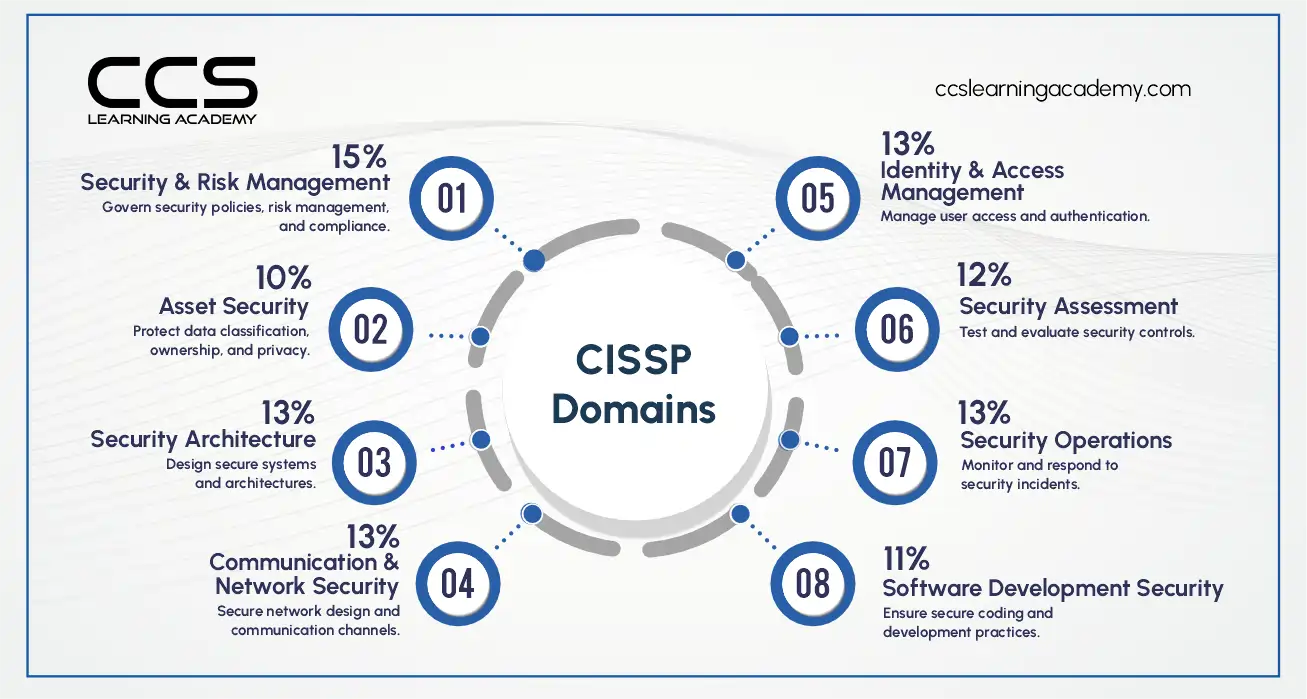
Key Domains
- Security and Risk Management.
- Asset Security.
- Security Architecture and Engineering.
- Communication and Network Security.
- Identity and Access Management (IAM).
- Security Assessment and Testing.
- Security Operations.
- Software Development Security.
CISSP-certified professionals possess a comprehensive understanding of cybersecurity principles and practices, making them well-equipped to design, implement, and manage robust security programs.
Prerequisites
To become a CISSP, candidates must pass a rigorous exam and have at least five years of cumulative, paid work experience in two or more of the eight CISSP domains. A four-year college degree or an approved credential can substitute for one year of experience.
Skills Gained
- Designing and implementing secure systems and networks.
- Conducting risk assessments and managing risk.
- Developing and enforcing security policies and procedures.
- Implementing identity and access management solutions.
- Monitoring and responding to security incidents.
- Ensuring compliance with regulations and standards.
Common Job Roles
- Information Security Analyst.
- Security Architect.
- IT Security Engineer.
- Information Security Manager.
- Chief Information Security Officer (CISO).
Read more: What is TTP in Cybersecurity? Tactics, Techniques, and Procedures.
Industry Demand and Salary
CISSP is highly sought after across various industries, including finance, healthcare, government, technology, and consulting. According to Reports, the average annual salary for CISSP-certified professionals in the United States ranges from $90,000 to $140,000, with a median of around $117,000 as of 2024.

Comparing CISA, CISM, and CISSP
While CISA, CISM, and CISSP all demonstrate expertise in information security, they each have a unique focus and target audience. Here’s a table comparing the CISA, CISM, and CISSP certifications:
| Criteria | CISA | CISM | CISSP |
|---|---|---|---|
| Focus | IT auditing, assurance, and control. | Information security management and governance. | Comprehensive cybersecurity principles and practices. |
| Target Audience | IT auditors, risk and compliance professionals. | Information security managers, risk managers, CISOs. | Security analysts, architects, engineers, managers. |
| Experience Requirements | 5 years of experience in IS auditing, control, or security (substitutions available). | 5 years of experience in IS management, with 3 years in CISM domains. | 5 years of experience in 2 or more CISSP domains (substitutions available). |
| Exam Format | 150 multiple-choice questions, 4 hours. | 150 multiple-choice questions, 4 hours. 150 multiple-choice questions, 4 hours. | Adaptive exam, 100-150 questions, 3 hours. |
| Recertification Requirements | 120 CPE hours every 3 years, minimum of 20 hours annually. | 120 CPE hours every 3 years, minimum of 20 hours annually | 120 CPE hours every 3 years, no annual minimum |
Choosing the Right Certification
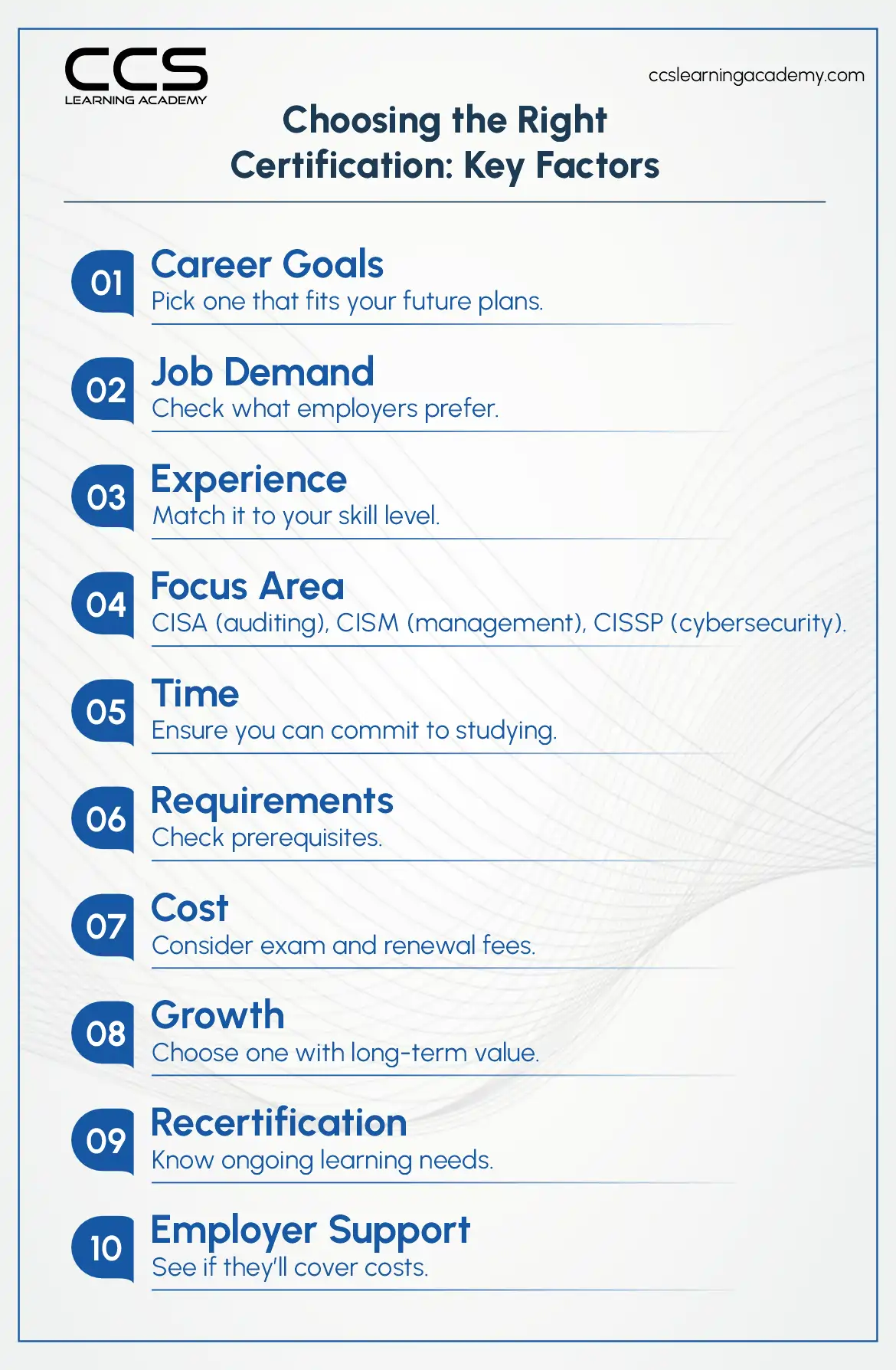
When it comes to picking the optimal cybersecurity certification, it’s crucial to weigh up several key factors before taking the plunge. Each credential brings something unique to the table and aligns with specific roles, experience levels, and career aspirations.
For IT auditors or those engaged in governance, risk, and compliance, CISA often emerges as the prime contender. This certification dives deep into the realm of auditing, control, and security, making it a must-have for professionals who regularly work in these areas. It’s a badge of honor that speaks volumes about one’s expertise in assessing and reporting on an organization’s technological infrastructure.
On the other hand, if you’re a seasoned security manager who thrives on crafting robust security programs and carefully dealing with risk management, CISM may be your ideal match. This elite certification is tailored for those, steering the ship of information security governance. It demonstrates a profound understanding of the complexities involved in designing, overseeing, and fine-tuning an enterprise’s security posture.
For those seeking a more all-encompassing foundation, CISSP emerges as a compelling choice. This widely-recognized certification covers a broad spectrum of security domains, making it a versatile asset for professionals across diverse security roles. Whether you’re eyeing a leadership position or aiming to be a multi-skilled position in the security realm, CISSP provides a solid core knowledge that can propel your career to new heights.
Before taking the leap, it’s wise to step back and think about your professional journey and the path you envision for the next 3-5 years. Do your skills and experience align with the typical job roles associated with each certification? Are you well-positioned to tackle the rigors of the exam and excel in the domains it emphasizes? Answering these questions honestly can help you zero in on the most suitable option.
To further refine your decision, it pays to keep your finger on the pulse of the job market. Take a deep dive into job listings and pay close attention to the certifications that employers are actively seeking. This real-world insight can be a compass, guiding you towards the qualification that will give you a competitive edge and open doors to covered opportunities.
Moreover, don’t hesitate to lean on the wisdom of the certification bodies themselves. Pore over their guidance on eligibility criteria and prerequisites to measure which credential is the most logical starting point for your unique background. Remember, your certification journey is a marathon, not a sprint. You can always build upon your foundation and stack additional certifications as your career evolves.
Preparing for the Exams
Now that you have selected your certification pathway, the tough part starts. Passing these exams will re Exam Preparation
After choosing the certification path, the hard work begins. Passing such tests will not be easy and requires commitment and strategy on how you study. You will only exhaust yourself and end up frustrated if you start preparing for the test without any strategy whatsoever.
- First things first, you need to understand the exam blueprint. Exam blueprints contain all the information regarding what will be covered in the exam, what domains hold more weight, and all the topics that need to be learned. The blueprint should be treated as the road map, allowing you to identify all important topics.
- The next step should be getting your hands on the materials published by the certification vendors themselves. Often, the materials released by vendors include reference books, practice exams, etc. Such a resource will guarantee you a thorough knowledge base, as the content was compiled by experts specifically for your certification exam.
- As essential as self-study may be in preparing for the exam, remember that the benefits of structured training cannot be overlooked. Attending classroom or online classes conducted by training partners such as the CCS learning academy offers the opportunity to immerse oneself in the program, complete with knowledgeable instructors, lab time, and peer interaction. These courses offer a more concentrated approach to learning, bringing several months of study into weeks of rigorous coursework.
- If your studies take you to the next level, do not hesitate to look into joining or forming study groups comprised of individuals studying the same certificate. Being among other professionals who will be taking the exam can serve to spur each other on in their endeavors, as well as help each other with insights and encouragement as you struggle through tough concepts.

Continued Commitment to Learning
- Earn CPE credit via various modes of education such as study, conference attendance, workshops.
- Learn about annual revisions to certifications programs, exams, and maintenance requirements.
- Engage in reading books, blogs and periodicals in order to learn about new developments.
- Take part in professional discussions pertaining to your certification field.
- Always try to enhance skills in order to make your certification useful for many years ahead.
Read more: CISA vs CISM vs CRISC: Which is the Best Cybersecurity Certification?
Final Thoughts
To summarize, there is no denying that the CISA, CISM and CISSP certifications are among the most valued in the world of cybersecurity. The choice as to which of the certifications you are to begin your pursuit of will depend upon your current professional status and future goals.
With proper preparation and dedication towards skills development after earning the certification, any of these could be a stepping stone to taking your career forward in a rapidly expanding area such as information security.
At CCS Learning Academy, we provide tailored courses for CISA, CISM and CISSP to make sure that you have all that it takes to become certified and move up the ranks in information security. Having more queries?
FAQ
Q1. Which certification is better in 2026: CISA, CISM, or CISSP?
A. The best certification depends on your career goal. CISA fits IT audit, compliance, and assurance roles. CISM fits cybersecurity management and governance roles. CISSP fits security architecture, engineering, operations, and senior cybersecurity roles.
Q2. Is CISA better than CISM for audit and compliance careers?
A. Yes. CISA is a stronger fit for professionals focused on IT audit, internal controls, risk assessment, governance, and compliance. ISACA lists CISA as a certification for information systems auditing, control, and security experience.
Q3. Is CISM better than CISSP for security managers?
A. CISM is often better for professionals who manage security programs, governance, risk, and incident response. CISSP is broader and more technical, while CISM focuses more on security leadership and management.
Q4. Is CISSP still worth it in 2026?
A. Yes. CISSP remains valuable for experienced cybersecurity professionals because it covers eight security domains and supports roles in security architecture, operations, risk management, and leadership. ISC2 requires five years of full-time experience across at least two CISSP domains.
Q5. What is the main difference between CISA, CISM, and CISSP?
A. CISA focuses on auditing and control. CISM focuses on managing security programs. CISSP focuses on broad cybersecurity knowledge across technical, operational, and governance areas.
Q6. Which certification should I choose for a cybersecurity leadership role?
A. Choose CISM if your target role involves security governance, program management, risk management, and incident management. Choose CISSP if the role also requires strong technical security knowledge and architecture-level decision-making.
Q7. Which certification is best for IT auditors?
A. CISA is the best match for IT auditors, risk analysts, compliance professionals, and assurance teams. It aligns with work involving audit processes, controls, governance, and security review.
Q8. Which certification is best for security architects?
A. CISSP is usually the better fit for security architects because it covers security architecture, engineering, identity and access management, network security, risk, testing, operations, and software security.
Q9. Which is harder: CISA, CISM, or CISSP?
A. Difficulty depends on your background. CISA feels harder for people without audit experience. CISM feels harder for people without management or governance experience. CISSP feels harder for many candidates because it covers a wide range of cybersecurity domains.
Q10. Do CISA, CISM, and CISSP require work experience?
A. Yes. CISA requires five or more years of professional experience in information systems auditing, control, or security. CISM requires five or more years of CISM-related professional experience across at least three of its four domains. CISSP requires five years of full-time experience across at least two CISSP domains.


